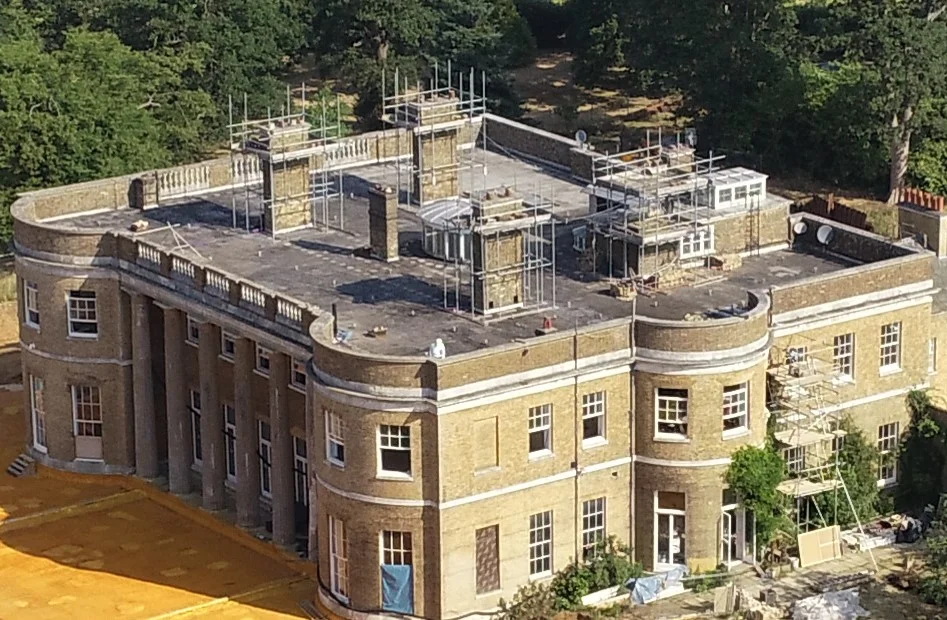
If a gale has moved a slate on your listed roof, the first job is to keep the water out and everyone safe, and the second is to tell your council what you did. Stopping a leak is allowed to be urgent. Permanent repairs that change how the roof looks are a different matter and may need consent first. Here are the six questions I would want answered on the morning after.
New to this? Start with Heritage architect: the areas we work in
1. Should I go up and sort it myself?
No. A wet slate roof after a gale is dangerous, and a fall does more harm to an owner than a leak does to a house. Look from the ground, with binoculars if you have them, and take photographs of the roof, the loose slate and anything that has landed in the garden.
Those photographs matter later. They show the council, your insurer and your roofer what the roof looked like before anyone touched it.
2. Is a leak an emergency in the eyes of the law?
It can be, though the law treats it carefully. Section 7 of the Planning (Listed Buildings and Conservation Areas) Act 1990 forbids works for a listed building's "alteration or extension in any manner which would affect its character" unless they are authorised. Section 9 makes breaking that rule an offence.
Section 9(3) then sets out a defence. In my words, you would need to show that the works were urgently necessary, that temporary support or shelter would not do instead, that you did only the least the situation demanded, and that you gave the council written notice, with detailed reasons, as soon as reasonably practicable. The Act's own wording for that third test is that the works were "limited to the minimum measures immediately necessary".
I read that as a narrow door and not a licence: it helps you if something is questioned afterwards, and it is no permission to rely on beforehand. The safer course is to ring the council's conservation officer on the first working morning, describe what has happened and ask what they want to see.
It is a narrow door and not a licence: stop the water, do the least, and tell your council.
3. What counts as "the least"?
My own rule of thumb, which is opinion and not law, is this: anything I can undo in an afternoon without leaving a mark.
| Step | How I think of it | Why |
|---|---|---|
| A tarpaulin or temporary sheet over the damaged area, weighted or strapped without nailing into historic timbers | Temporary shelter | It can come off the same day |
| A bucket and a towel in the room below | Housekeeping | It touches nothing |
| Photographs and a short note of the time | Evidence | It protects you with the council and your insurer |
| Picking up the fallen slate and keeping it | Salvage | The slate may be the pattern a repair has to match |
| Re-fixing a slate with new nails or a different material | A repair | Ask before you do it |
| Stripping a slope, or swapping slate for something else | A change of character | It will need consent |
Keep every fallen slate, even a broken one. Old slate is hard to match, and a roofer who can see the original is far better placed to match it.
4. Can I just replace the slate like for like?
A small like-for-like repair may not affect a building's character, but I cannot tell you that without seeing your roof, and your council decides. GOV.UK's planning practice guidance says that listing covers the whole building and that doing works that need consent without it is a criminal offence. It also says the council's own officers are the people to ask when you are in doubt.
So I would ask the question in writing, with photographs: here is the slope, here is the slate, here is what the roofer proposes. If the answer is "that is a repair", I would keep the email. If the answer is "that needs consent", I would be glad I asked before a ladder went up.
I wrote about the same line between repair and alteration in my piece on repairing gutters on a listed building. The same habit serves here: match what is there, and be able to show you did.
5. What do I tell the roofer?
Ask for someone who has worked on old roofs and will talk to the council with you. I would ask three things:
- Can you show me the nail holes and the fixings used on this slope before you touch it?
- Will you salvage and reuse what can be saved, and show me what you would replace?
- Can you write down exactly what you did, slope by slope, for the council?
At Bluecoats House in Hertford, the project page describes how the slate mansard was studied before a new roof was detailed to match. You can see how the existing roof was read first on the Bluecoats House case study. The lesson I take from it is a modest one: look at what is there before you decide what to do.
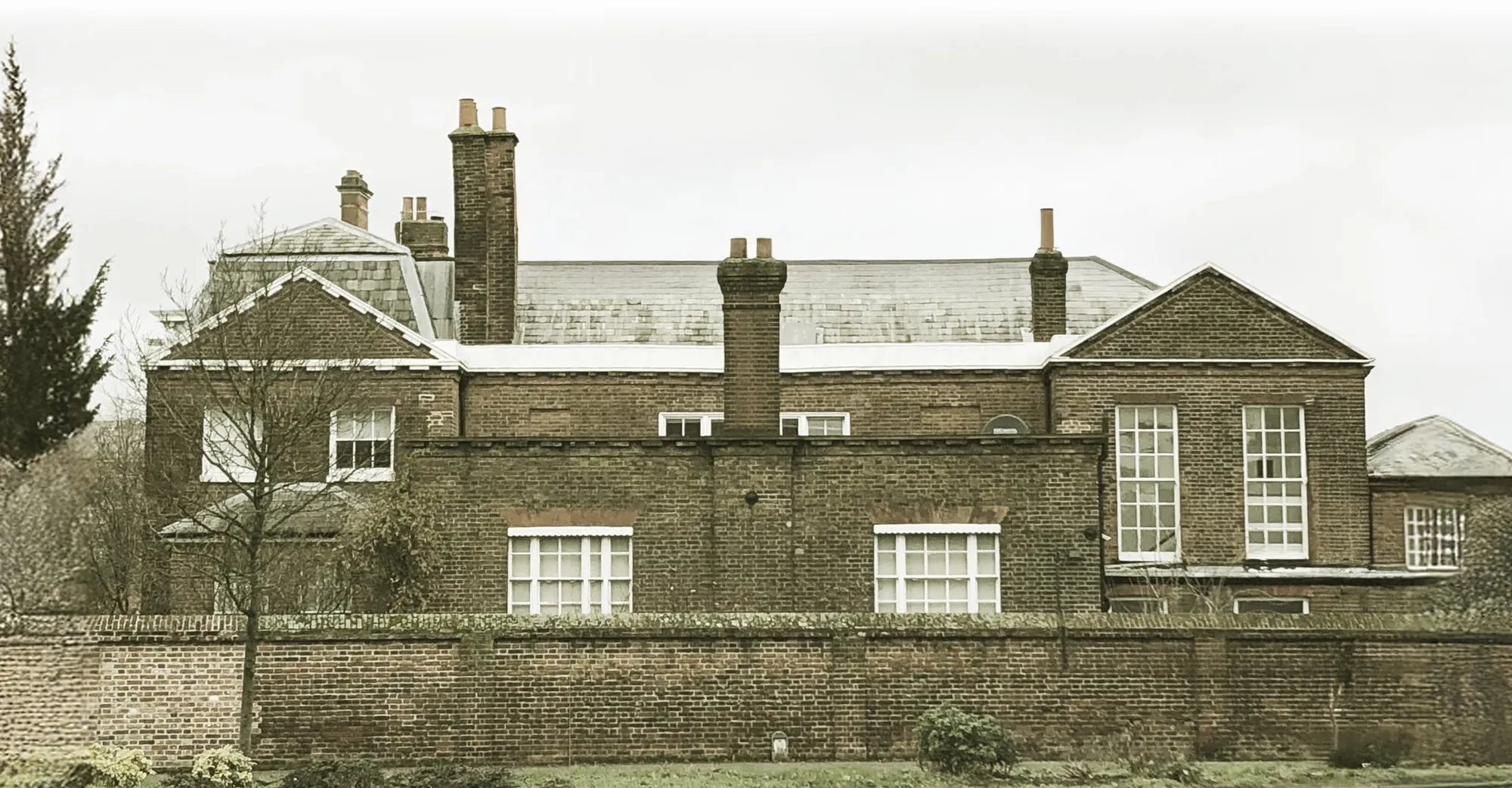 The existing roof at Bluecoats House, Hertford, as the case-study page shows it. A slate roof is read as a whole before any single slate is touched.
6. What if the water has already got in?
Move what you can out of the way, and stop the water where it first enters the building. Then give the structure time. A ceiling that has been wet needs to dry gently, and I would not seal it, paint it or close it up in a hurry. My earlier piece on damp in an old house covers why drying beats sealing, and why the cause matters more than the stain.
If you want to know more about how councils and heritage architects usually divide this work, the questions answered page is a good place to start.
A short word on the weather
I would rather you read this now, on a dry day, than at midnight in a gale. Put the conservation officer's number in your phone. Find out who your roofer would be before you need them.
Old roofs have come through a great many storms, and they are mostly forgiving to an owner who acts calmly and tells the right people early.
Speak to Giles if you would like help working out what a storm has done to your listed roof: book a conversation, get in touch, call +44 (0)7737 745211, or send a WhatsApp voice note.
Giles Paul Shorter — ARB registered · RIBA member · on the RIBA Conservation Register · 17+ years specialising in listed and historic buildings.
- Planning (Listed Buildings and Conservation Areas) Act 1990, section 7 — Restriction on works affecting listed buildings ↗ (accessed 2026-10-19)
- Planning (Listed Buildings and Conservation Areas) Act 1990, section 9 — Offences ↗ (accessed 2026-10-19)
- GOV.UK — Planning practice guidance: Conserving and enhancing the historic environment ↗ (accessed 2026-10-19)
Text © 2026 SOANE Architects Ltd. You’re welcome to quote a short extract with a credit and a link back. Photographs belong to their photographers and are credited beneath each image.